
GLP Boom: Explained
GLP-1 Market Playbook for Healthtech: Product & Go-to-Market Strategy
A guide for digital health founders building in the GLP-1 space. Everything you need to understand the market, the risks, and the realities of execution.

1. Market size & money
The basics
Bringing a GLP-1 product to market means navigating pharma-level compliance, supply constraints, and shifting regulator expectations; this is not something founders can execute quickly without specialized engineering and operational support. But let’s go back to square 1, what are GLP-1 drugs?
Originally designed to help manage type 2 diabetes, GLP-1 receptor agonists have gained widespread attention for another reason: their ability to support significant, sustained weight loss. By mimicking a natural hormone that regulates blood sugar and appetite, these medications change the way the body and the brain respond to food.
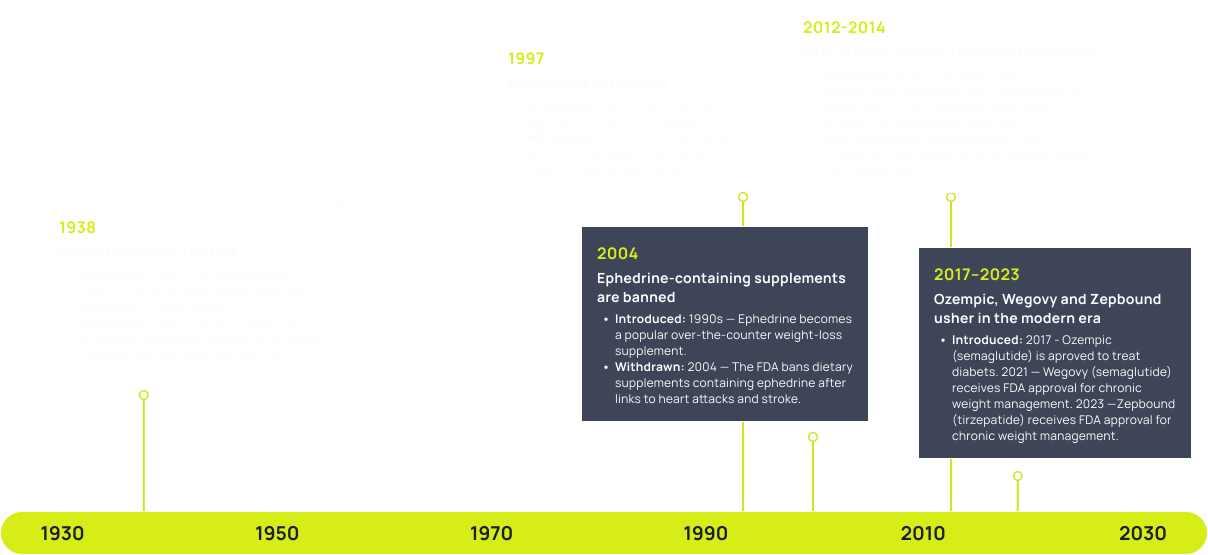
First the basics: Weight loss drugs are not new. In fact, their origin goes back at least hundred years:

What do we have today?
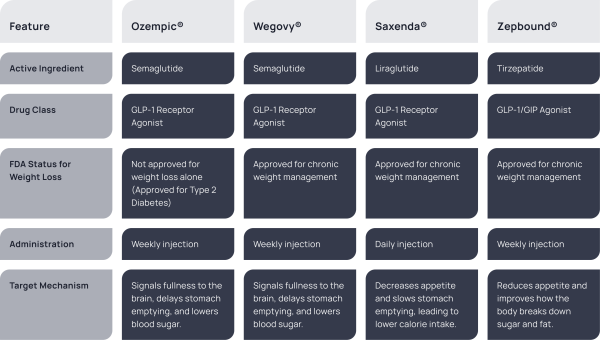
At least 4 new drugs are changing the way we look at diabetes and obesity.
The GLP-1 Industry in numbers
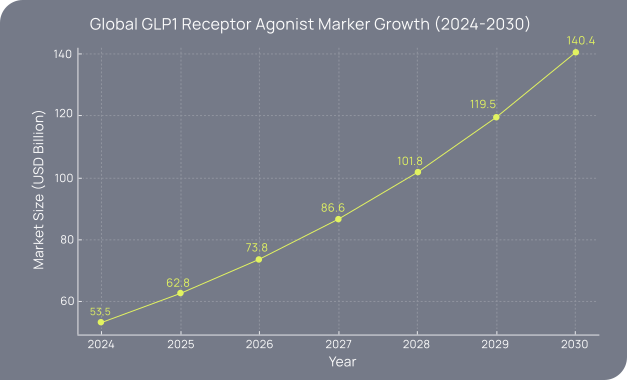
The story extends beyond biology into behavior, where the impact shows up clearly in the data. The global market for GLP-1 receptor agonists was valued at USD 53.46 billion in 2024 and is expected to grow to USD 156.71 billion by 2030, reflecting a compound annual growth rate of 17.46% between 2025 and 2030.
The GLP-1 market is evolving rapidly, with innovation driving progress while introducing new clinical and regulatory challenges specially around compounded formulations and reimbursement limitations.
Reimbursement Pathways and Affordability
Affordability remains the "major barrier" to widespread adoption, making reimbursement a key strategic aspect.
The high cost of branded GLP-1 medications, which range from $936 to $1,349 per month before insurance and about $1,000 for uninsured patients, presents a significant financial barrier for many individuals. More than half of adults who have used GLP-1 drugs report difficulty affording them, and 45% of current users cite cost as a primary reason for discontinuing treatment.
Affordability depends largely on insurance coverage, yet only 34% of employer plans cover GLP-1s for weight loss in non-diabetic patients. Medicare is legally prohibited from covering weight-loss prescriptions, contributing to just 1% usage among adults 65 and older. Regardless, despite concerns about the financial impact on the federal budget, 61% of adults believe Medicare should cover weight-loss prescriptions for overweight individuals.
In response to these cost barriers, telemedicine providers offering compounded versions of GLP-1 drugs have emerged as a more accessible, cash-based alternative that operates outside the traditional insurance system.
Regulatory Hurdles and Compounded Drugs
One of the most pressing regulatory issues in the GLP-1 space centers on compounded formulations, which have expanded access and affordability but fall outside the rigorous oversight applied to branded medications.
ⓘ What are compounded medications?
Compounding refers to the process in which a licensed pharmacist, physician, or an individual working under a pharmacist's supervision in an approved facility prepares a customized medication by combining, mixing, or modifying ingredients to meet a specific patient's needs. Unlike standard prescription drugs, compounded medications are not reviewed or approved by the FDA, meaning the agency does not assess their safety, effectiveness, or quality before they are distributed. While these drugs can be essential for patients who require personalized treatments, they can also present potential risks.
In this context, it is important to distinguish between 503A compounding pharmacies and 503B outsourcing facilities. 503A pharmacies operate on a traditional, patient-specific basis, compounding medications only in response to individual prescriptions. By contrast, 503B facilities function at a larger, more industrial scale, producing compounded drugs in batches for hospitals and clinics under a different regulatory framework. This distinction matters in the GLP-1 market, as regulatory scrutiny, quality controls, and allowable production practices vary significantly between the two models and, as of April 2026, the two tiers face meaningfully different enforcement exposure.
Compounded GLP-1 drugs are not FDA-approved. They became broadly available as a result of the drug shortage declared in 2022, but that legal foundation has since eroded. The FDA removed tirzepatide from the Drug Shortage List in December 2024 and semaglutide in February 2025, eliminating the primary statutory basis — the shortage exemption under the Federal Food, Drug, and Cosmetic Act — that had allowed commercial-scale compounding. Without an active shortage declaration, compounded formulations that are essentially copies of FDA-approved drugs are presumptively unlawful, and the FDA has made clear that affordability, convenience, or patient preference are insufficient justifications on their own.
Many primary care physicians view compounded GLP-1s as less regulated, less consistent, and potentially less safe. These concerns were amplified when Novo Nordisk issued a public warning about the "significant dangers" associated with illegitimate compounded semaglutide products, some of which were found to contain impurities, harmful ingredients, or incorrect dosages. As of early 2025, the FDA had received more than 455 adverse event reports involving compounded semaglutide and more than 320 involving compounded tirzepatide — figures that the agency now cites as active justification for enforcement.
The regulatory gray zone that sustained much of the compounding industry through 2023 and 2024 has narrowed substantially, and the FDA is actively working to close it. On April 1, 2026, the FDA issued a significant policy clarification targeting the most common remaining workaround: compounders and telehealth providers had been adding a secondary ingredient — most commonly vitamin B12 — to their semaglutide formulations and marketing them as distinct, patient-specific products not subject to the "essentially a copy" prohibition. The FDA's April 1 statement directly addressed this practice, clarifying that adding an ingredient does not automatically exempt a compound from the "essentially a copy" standard. A compounded formulation must reflect a clinically documented, individualized need for that specific combination, not simply a commercial differentiation strategy.
For 503A pharmacies, the FDA confirmed a narrow enforcement safe harbor: the agency does not currently intend to take action against pharmacies that compound an essentially-a-copy GLP-1 product, provided they fill no more than four prescriptions of that preparation per calendar month. This is not an endorsement of the practice but more of a reflection of the FDA's tolerance for genuine patient-specific compounding at de minimis scale. For 503B outsourcing facilities, no equivalent safe harbor appears to apply, and enforcement grace periods that had been in place through early 2026 are expiring, leaving bulk compounders of GLP-1s in a substantially more precarious legal position.
The pharmaceutical industry has also begun to assert its intellectual property rights directly. In February 2026, Novo Nordisk filed a federal patent infringement suit against Hims & Hers Health, one of the largest telehealth distributors of compounded semaglutide, in the U.S. District Court for the District of Delaware. The case settled in March 2026: Novo dropped the lawsuit in exchange for Hims agreeing to transition its platform entirely to authorized, branded semaglutide products and to cease all advertising of compounded GLP-1 alternatives. The settlement is widely read as a template: manufacturers now have both regulatory and legal tools to redirect compounding-adjacent telehealth businesses toward authorized distribution channels.
The overall picture has shifted from the gradual narrowing described in earlier reporting to something closer to an end-game phase for commercial-scale GLP-1 compounding. As of April 2026, estimates suggest that nearly half of online pharmacies still offering compounded GLP-1 products may be doing so in violation of FDA regulations, a gap that reflects enforcement capacity rather than regulatory ambiguity. The pathway for compounded GLP-1s has not closed entirely: legitimate patient-specific 503A compounding, with individualized clinical documentation, at the four-prescription safe harbor ceiling, remains legally available for genuine edge cases such as documented allergies to branded product excipients. But as a commercially scalable model, compounded GLP-1 distribution is functionally over.
Competitors/ big players in the industry:
Eden
Fast, Personal Prescription Health & Wellness
Eeden offers fast, fully online access to a broad prescription wellness portfolio including GLP-1s, NAD+, Sermorelin, and hormone therapies delivered through a transparent cash-pay model with same-day doctor visits.
What they are doing right
Financial Guarantee: Their Weight Loss Warranty provides a full refund if the patient does not reach their goal.
High Clinical Access: Unlimited clinician video calls and 24/7 medical assistance ensure continuous support.
Reliable Logistics: Guaranteed on-time refills help maintain adherence and avoid treatment gaps.
Consistent Pricing: All doses are priced the same, eliminating cost uncertainty as patients titrate.
RemedyMeds
RemedyMeds offers a straightforward cash-pay GLP-1 program focused on speed, clinical access, and predictable outcomes, reinforced by a Weight Loss Warranty and around-the-clock medical support.
What they are doing right
Financial Guarantee: Their Weight Loss Warranty provides a full refund if the patient does not reach their goal.
High Clinical Access: Unlimited clinician video calls and 24/7 medical assistance ensure continuous support.
Reliable Logistics: Guaranteed on-time refills help maintain adherence and avoid treatment gaps.
Consistent Pricing: All doses are priced the same, eliminating cost uncertainty as patients titrate.
Hims & Hers
Hims & Hers is a publicly traded digital health platform serving over 2.4 million subscribers through an asynchronous, technology-driven care model spanning sexual health, hair care, mental health, and weight management.
What they are doing right
Proprietary Clinical Technology: Their AI-driven MedMatch system uses insights from hundreds of thousands of de-identified interactions to support personalized treatment decisions, supported by a custom-built EMR that improves clinical workflows and provider efficiency.
High Clinical Access: Unlimited clinician video calls and 24/7 medical assistance ensure continuous support.
Reliable Logistics: Guaranteed on-time refills help maintain adherence and avoid treatment gaps.
Consistent Pricing: All doses are priced the same, eliminating cost uncertainty as patients titrate.
Fifty410
Trusted Weight Loss, Hair Growth & Longevity Treatments
Fifty410 focuses on transparent, commitment-free access to compounded weight loss, hair growth, and longevity treatments, with an emphasis on convenience by shipping the full multi-month medication supply upfront.
What they are doing right
Upfront Fulfillment: Shipping 12 weeks of medication at once reduces refill friction and supports treatment consistency.
No-Commitment Model: Cash-pay access with no memberships or hidden fees.
Transparent Pricing: Clear tiered pricing structures with full program totals and monthly averages.
FSA/HSA Friendly: They highlight potential reimbursement eligibility for their weight loss treatments.
Ro
Weight Loss – Ro Body Membership | Ro
Ro’s value proposition centers on high-touch insurance coordination and concierge support aimed at securing coverage for FDA-approved branded GLP-1 medications.
What they are doing right
Insurance Advocacy: Their insurance concierge handles all paperwork and actively works to obtain coverage for branded GLP-1s.
Diagnostic Testing Included: Membership includes metabolic testing at Quest or a free at-home kit where Quest is unavailable.
Focus on Branded Treatments: They highlight access to FDA-approved options such as Zepbound, Wegovy, and Ozempic.
2. The consumer
There’s no single profile that defines a GLP-1 user. These medications are prescribed for a range of conditions and their growing use reflects both clinical need and cultural momentum. GLP-1 users typically fall into one of two groups based on their main motivation:
In spite of this, what unites most consumers, is that GLP-1 therapy often brings major lifestyle changes. First lets take a look into what the journey of someone that takes the medication might look like
Costumer Journey Map
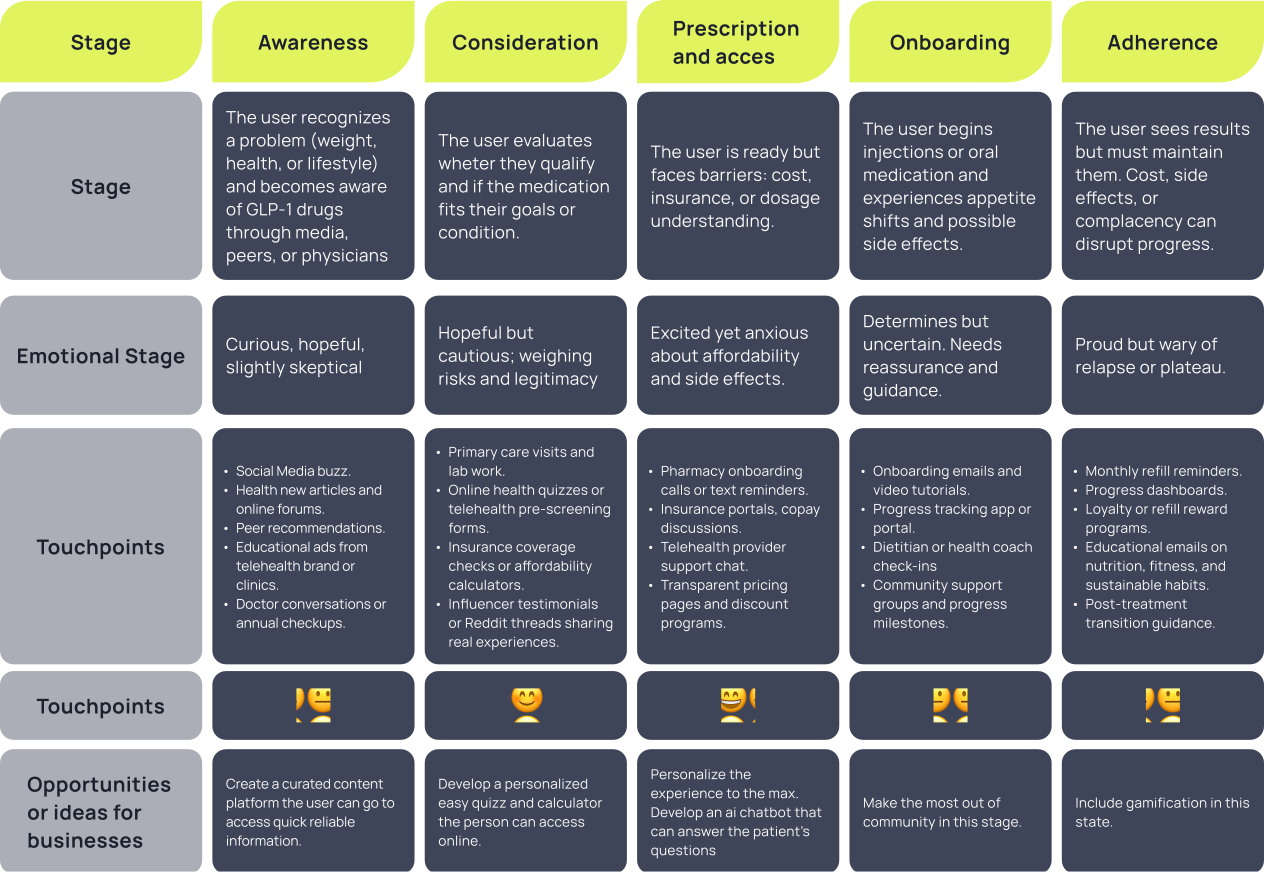
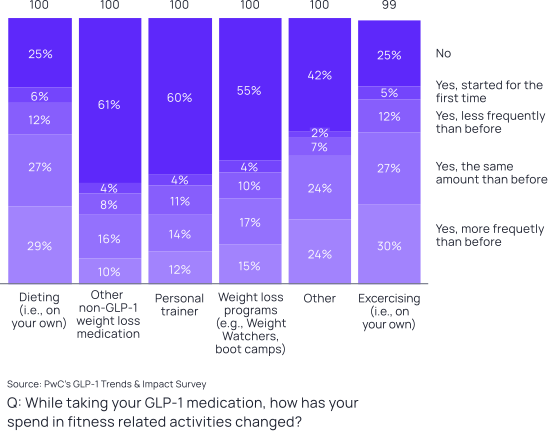
What most clearly distinguishes GLP-1 users is the change in their daily habits once they are on treatment.
Appetite Suppression: Many describe a quieter “food noise”—they simply think about food less between meals.
Dietary Adjustments: Consumers report spending ≈about 11% less on most food categories, especially sweet and salty snacks and baked goods. Many redirect their spending toward fresh produce or protein-rich foods, reflecting both physical and psychological shifts in their approach to eating.
Fitness and Exercise: People using GLP-1s show a wide range of habits. About 57% reported working out the same amount or more while on the medication, while 43% reported exercising less or not at all. These differences often come down to personal motivation and attitudes toward health.
ⓘ Why does this matter?
Having in mind their pains and habits can lead to more profitable solutions. Designing these solutions is extremely non-trivial. Each insight affects clinical workflows, risk profiles, and tech architecture.
3. Emerging Business Models
Every tech product is, at its core, is a business. Once you understand who your consumer is and what drives their decisions, the next step is figuring out how to reach them and how your tech fits into the story they want to tell about themselves.
Below are three emerging business models shaping the GLP-1 and longevity market with their biggest advantages and risks:
Each model succeeds when it strikes a balance between scalability, compliance, and trust. The smartest builders will pick the structure that best aligns with their product’s story and the behavior their users already believe in.
At Light-it we specialize in working and helping companies with business models like A or B to scale their digital solutions.
4. Technology & product trends
Speed vs. Differentiation: What to Build and What to Buy
In a crowded market, speed validates the concept, but differentiation builds long-term value. This dilemma is key and will define your product and business. For this reason, you should always build for differentiation: Create proprietary systems around adherence tracking, behavioral reinforcement, or personalized data models. These are your defensible assets.
In short: Buy the basics; build what makes you impossible to copy.
Let's get into the specifics:
Architecture and Core Components:
The “Buy” Strategy
When starting out, speed to market comes from assembling a proven foundation rather than building everything from scratch. Even off-the-shelf tools require thoughtful integration, compliance validation, and custom logic to support clinical workflows.
Early-stage founders should buy API-friendly solutions for core operations and focus internal engineering on features that drive adherence, retention, and outcomes. This approach accelerates go-to-market while preserving runway, provided the right team is in place to integrate and extend the stack.
Medication and Prescribing Provider: Vendors like Openloop can handle medication management and clinician operations, ideal for founders without in-house medical teams.
Electronic Health Record (EHR): Use a flexible, API-friendly platform such as Healthie which supports both integration and customization. Quick customization might help you add features and branding according to your business needs without compromising time.
Onboarding: Founders can choose between configurable form platforms like Formsort, Jotform, or Embeddables, or invest in a fully custom-built solution, depending on their technical resources and customization needs.
Telehealth Functionality: some EHRs such as Healthie or Tellescope can also deliver telehealth capabilities based on client needs.Depending on the state of the business, it is needed to evaluate if it is possible to start with an “out-of-the-box” solution but to customize the experience adding features that are proven to better experience and adherence to treatment.
Recommended Stack
All the technologies behind a GLP-1 platform (back-end systems, mobile and web applications, cloud infrastructure, and third-party services) must be tightly integrated to operate reliably. Data needs to move securely across the stack while remaining compliant and scalable.
Modern frameworks make this possible by supporting secure data handling, real-time interactions, and consistent user experiences across platforms.
Cloud infrastructure (often AWS) adds what GLP-1 companies depend on most:
Compliance: Built-in support for healthcare standards like HIPAA.
Agility: The ability to update workflows quickly as regulations change.
Scalability: Performance that holds up under telemedicine volume, prescription load, or millions of data events.
But even the best tools won’t get you there unless they’re integrated properly and extended with custom logic. This is where Light-it adds real value. This category demands engineers who understand:Compounding refers to the process in which a licensed pharmacist, physician, or an individual working under a pharmacist’s supervision in an approved facility prepares a customized medication by combining, mixing, or modifying ingredients to meet a specific patient’s needs.
How to integrate multiple clinical and operational systems without breaking compliance,
How to customize workflows when off-the-shelf tools aren’t enough,
How to design user experiences that support patient adherence,and how to build a platform flexible enough to keep up with regulation, reimbursement, and clinical change.
And we have exactly the right people. Without the right expertise, companies often end up with brittle integrations, unreliable infrastructure, and compliance gaps that become costly to fix later.
Talk to an ExpertCompliance, Risk, and Regulation
In case you were wondering, you can not risk it when working in healthtech. These are some must-know tips when it comes to compliance when building.
Meet Core Standards: Ensure adherence to HIPAA. For this, it is key to have a team by your side that knows the nuances of regulations and know what it entails.
Plan for Regulatory Flux: Expect ongoing changes and allocate resources to manage them accordingly. Also expect changes in regulations to delay or change priorities. A tech team that knows this already estimates with this in mind and will make sure you don't miss business opportunities.
Reduce Risk Through Trusted Vendors: Especially in healthcare, whether they are tech vendors or medication suppliers do not compromise trust for saving a few bucks.
Sign BAAs: Require a Business Associate Agreement with every vendor handling protected health data. This will ensure everyone is on the same page regarding HIPPA compliance.
Own Sensitive Data: For proprietary coaching or engagement models, maintaining direct control of your data layer is worth the added compliance effort.
Most founders underestimate the cost of a compliance mistake, a single misconfigured integration can lead to liability, operational shutdown, or payer lockout.
Flexibility and Scaling
The GLP-1 market changes fast, new drugs, shifting payer rules, evolving science. Your platform must be ready to move with it.How do you navigate it?
Choose Modular Systems: Avoid vendor lock-in. Prioritize flexible components that allow fast pivots. Remember modular systems often require orchestrated integrations and proactive refactoring to avoid technical debt that can break clinical operations at scale.
Understand the Cost of Customization: Building everything in-house can be expensive, and migrating systems later adds more cost and complexity.
UX/UI
In the GLP-1 category, the platform must be built around adherence and personalization. UX shapes how patients stay engaged and how providers deliver care. It becomes part of the product’s competitive edge.
Patients need ongoing guidance, clear progress tracking, structured coaching touchpoints, and easy access to their care plan. A well-designed patient portal is where these interactions happen, and it directly influences outcomes and long-term retention.
The provider portal plays an equally important role. Clinical teams need efficient workflows, clean interfaces, fast charting, and a consolidated view of patient progress.
For the marketing and public-facing website, we recommend using Webflow. It allows teams to build beautifully designed, conversion-optimized sites quickly, without heavy engineering cycles.
Its flexibility lets your team update content, structure, or messaging independently, an advantage in an industry where regulations evolve and competitive positioning needs constant adjustment.
A thoughtful approach across all three layers strengthens both the product and the business.
Our take
The industry combines strict clinical requirements, rapidly changing regulations, sensitive patient data, and the need for systems that can scale quickly. Because of that, the technical choices you and the team that implements them make, directly influence your ability to launch, operate, and grow safely.
Technology alone isn’t what makes a patient-facing GLP-1 platform succeed.
The real differentiator is the technical team behind it.
You can hire and manage your own development team, or you can work with an engineering team that already understands the technical, clinical, and regulatory demands of the industry. We specialize in making all these systems work together seamlessly, while building the custom features that set your product apart.
Light-it helps you launch, integrate, and scale a GLP-1 platform with the confidence that every technical piece (off-the-shelf and custom) is built to perform.
5. 101 Funding in this space
Founders in the GLP-1 space need to understand more than market size and regulation, they must understand how capital moves in this category. Funding is shaped by strong growth potential from subscription models and recurring revenue, balanced against investor scrutiny around regulatory exposure, compounded formulations, pricing pressure, and the need for broader insurance coverage to reach scale.
Investors are drawn to the category’s momentum but cautious about its volatility. The companies that stand out are those that pair a clear compliance strategy with a sustainable business model, one that makes ongoing care simple for patients while giving investors and regulators confidence in how the business operates.
Things to take into account and can differentiate your company in this space:
How capital is flowing
In case you were wondering, you can not risk it when working in healthtech.
These are some must-know tips when it comes to compliance when building.
Big bets on new molecules / combinations: Investors are committing large rounds to next-gen GLP-1, GLP-1/GIP combos, amylin analogs, and oral formulations. We are seeing more large Series A/B in biotech.
Strategic pharma licensing & M&A: big pharma is buying or licensing promising obesity candidates (multi-$100M to multi-$B deals). That’s a major exit path and strategic investor presence.
Digital care growth rounds: companies that offer nutrition, coaching, virtual obesity clinics, and payer/employer integrations are attracting tens of millions (Series A/B) to scale clinician networks and platform integrations. These patient-facing apps are gaining traction as not only they receive revenue from prescribing medication but also because they offer several ways to scale up the service and make an even higher ticket rate.
Enablement / infra interest: investors fund pharmacy fulfillment, outcomes data platforms, and SaaS that reduces friction between provider ↔ payer ↔ pharmacy. This is less public but important as the future will be defined by systems and coverage, not rapid prescription churn.
Life sciences VCs & biotech funds
(e.g., RTW, Atlas, Bain Capital Life Sciences)
Biotech VCs determine what GLP-1 era 2.0 looks like, and founders should watch them closely because they create long-term infrastructure needs.
Sets the pace of innovation These funds finance the next generation of GLP-1s, oral formulations, and combo therapies. Whatever they fund becomes the future demand driver for clinics, telehealth, and patient-facing tools.
Shapes long-term market supply Drug availability, pricing, and differentiation depend on what biotech investors choose to back. If, for example, they fund more orals and multi-agonists, the medicine becomes more accessible to patient populations and it drives more demand for tech.
Biggest exits drive ecosystem confidence Mega rounds + pharma acquisitions of biotech send the strongest external signal that obesity remains a top-priority therapeutic area.
Growth equity & institutional investors
(e.g., Index Ventures, J.P. Morgan Growth, Goldman Growth)
Growth investors decide which digital health models become dominant platforms in GLP-1 care.
They scale the patient-facing layer These investors fund companies like Nourish, Fay, Form Health, the platforms that interact with millions of patients, not just molecules.
They validate the business models When growth funds write $30M–$100M checks, they’re signaling that GLP-1-driven care delivery is investable at scale, not a fad.
Move companies from “startup” to “infrastructure” They push companies to build real EHR integrations, insurance contracts, provider networks, fulfillment logistics, and employer channels.
Enable category-defining winners Growth capital transforms a telehealth clinic into a national provider, or a nutrition-logistics tool into a standard of care.
Strategic / corporate pharma investors
Pharma determines access, pricing, supply, and exits, the four pillars of GLP-1 market stability.(e.g., Roche, AbbVie, Novo Nordisk)
They control the drug pipeline and reimbursement Pharma’s licensing, M&A, and distribution decisions determine what products clinicians can prescribe and what insurers will cover.
Pharma is the ultimate exit path For many biotech and data companies, pharma is the buyer. Their appetite shapes valuations across the whole obesity ecosystem.
They dictate compliance, safety, and data needs Pharma cares deeply about real-world evidence, long-term outcomes, adherence, and side-effect monitoring. These are all big opportunities for startups to serve them.
They influence consumer perception When Novo or Eli Lilly endorses a digital platform or forms a partnership, that platform instantly becomes more credible.
Healthcare operators & PE-style builders
(e.g., Redesign Health, PE firms doing roll-ups)
Operators make GLP-1 care scalable and profitable, bridging the gap between science and patient experience.
They operationalize the care delivery layer This group builds and scales clinic networks, subscription models, and hybrid care models. They know how to run “messy” operations.
They create repeatable, defensible playbooks Redesign Health and PE-backed operators take something like “GLP-1 clinic” and turn it into a systematized unit economics.
They make the category investable By standardizing CAC, retention, staffing, and fulfillment, they make it easier for growth funds to invest downstream.
They consolidate fragmented care PE roll-ups can create national footprint obesity clinics — which offer founders a path for partnerships, B2B SaaS, or acquisition.
Design, integrate, and scale your digital GLP-1 product with us

6. Looking ahead
As GLP-1 expands beyond weight management, it’s becoming part of a much broader shift in preventive care, cardiometabolic health, and longevity-focused protocols.
We’re seeing new delivery models, tighter EHR integrations, remote monitoring workflows, layered behavior-change programs, and payer pressure shaping what “success” will look like for operators. This new market represents a structural change in how patients expect to access care, and how providers need to design their services to stay relevant, sustainable, and clinically sound.
If you’re building in this space, the path forward isn’t always straightforward, but it is navigable with clarity, the right insights, and a team that understands the operational, clinical, and product layers behind a GLP-1 service.
If you want a second set of eyes on your model or simply want to talk through your approach, we’re here to help. Reach out anytime.
Reach out anytime.

Sources
A GLP-1 Deep Dive — How Industries From Private Equity To Food Are Affected; Author: Sindhya Valloppillil; Link.
Best Weight Loss Medications Of 2025; Author: Forbes Health; Link.
Can I get GLP-1 medications shipped to my home?; Author: Pharmko, Inc.; Link.
FDA’s Concerns with Unapproved GLP-1 Drugs Used for Weight Loss; Author: U.S. Food and Drug Administration (FDA); Link.
Hold My Beer! GLP-1 Drugs and Shifting Consumer Behavior; Author: Jason Kritzer and James Cullen; Link.
How GLP-1 Medications Are Changing Consumer Behavior; Author: Ali Furman and Paul Leinwand; Link.
Inside CVS Ventures’ $25M Bet On Knownwell And The GLP-1 Economy; Author: Sindhya Valloppillil. Link.
KFF Health Tracking Poll May 2024: The Public’s Use and Views of GLP-1 Drugs; Author: Alex Montero, Grace Sparks, Marley Presiado, and Liz Hamel; Link.
LLY's GLP-1 Duo Boosts Sales Amid Rising Demand for Obesity Drugs; Author: SNS Insider, Matthew Benjamin, Kinjel Shah, and Abigail Beaney; Link.
Markets by Grant | Investing Behind GLP-1 Drugs; Author: Grant Demeter; Link.
The GLP-1 effect on MedTech; Author: Oliver Dolny and Ellen Zimmermann; Link.
From molecules to milestones: Reinventing for the future of weight loss drugs; Author: Diarra Lamar and Alana Payne; Link.
Getting to know GLP-1 users, a new kind of consumer; Author: Andrew Lindsay; Link.
WEIGHING THE GLP-1 MARKET; Author: Allison Nathan, Jenny Grimberg and Ashley Rhodes; Link.
The Rise of GLP-1s: Cost, Expanding Use, and Impact on Private Health Insurers; Author International Federation of Health Plans; Link.
GLP-1 Receptor Agonist Market Size, Share & Industry Analysis, By Drug (Semaglutide, Exenatide, Lixisenatide, Liraglutide, Dulaglutide, and Others), By Route of Administration (Oral and Parenteral), By Age Group (Pediatric and Adults), By Indication (Obesity, Diabetes, and Others), By Distribution Channel (Hospital Pharmacies, Retail Pharmacies, and Online Pharmacies), and Regional Forecast, 2025-2032; Author Fortune Business Insights; Link.
GLP-1: A medication worth $126 billion in sales by 2029?; Author UBS investment Bank; Link.
GLP-1 Receptor Agonist Market (2026 - 2033); Author Grandview Research; Link.