Behavioral Health Tech 2026 marked the industry's shift from measuring access to measuring outcomes. Here are the four main discussed themes of this conference
The Opening Chord in Nashville
Gaylord Opryland Resort & Convention Center came alive in the best way possible as Behavioral Health Tech (BHT) 2026 kicked off in Nashville. Between five active stages and an Expo Hall buzzing with innovators, the atmosphere was one of purposeful transformation. This year, the Dolly Stage carried a poignant weight. While always a nod to the spirit of Music City, it served this week as a quiet, soulful tribute to Dolly Parton herself.
For years, behavioral health technology has sold itself on access: more providers, more sessions, more coverage. But health plans are done paying for volume they can't measure, clinicians are done documenting care that doesn't change a treatment plan, and families are done waiting for a step-down that doesn't exist. The gap between "we increased access" and "we improved outcomes" is where this year's conference lived.
That focus on whole-person care extended beyond the sessions themselves. The Delta Mezzanine hosted early-morning All-Recovery and Al-Anon meetings before the day’s programming began. The District Yard ran Goat Yoga. Rula hosted pickleball matches on-site. An industry that sells wellness spent some of its own conference practicing it.


Goat Yoga and Pickleball matches - images courtesy of BHT
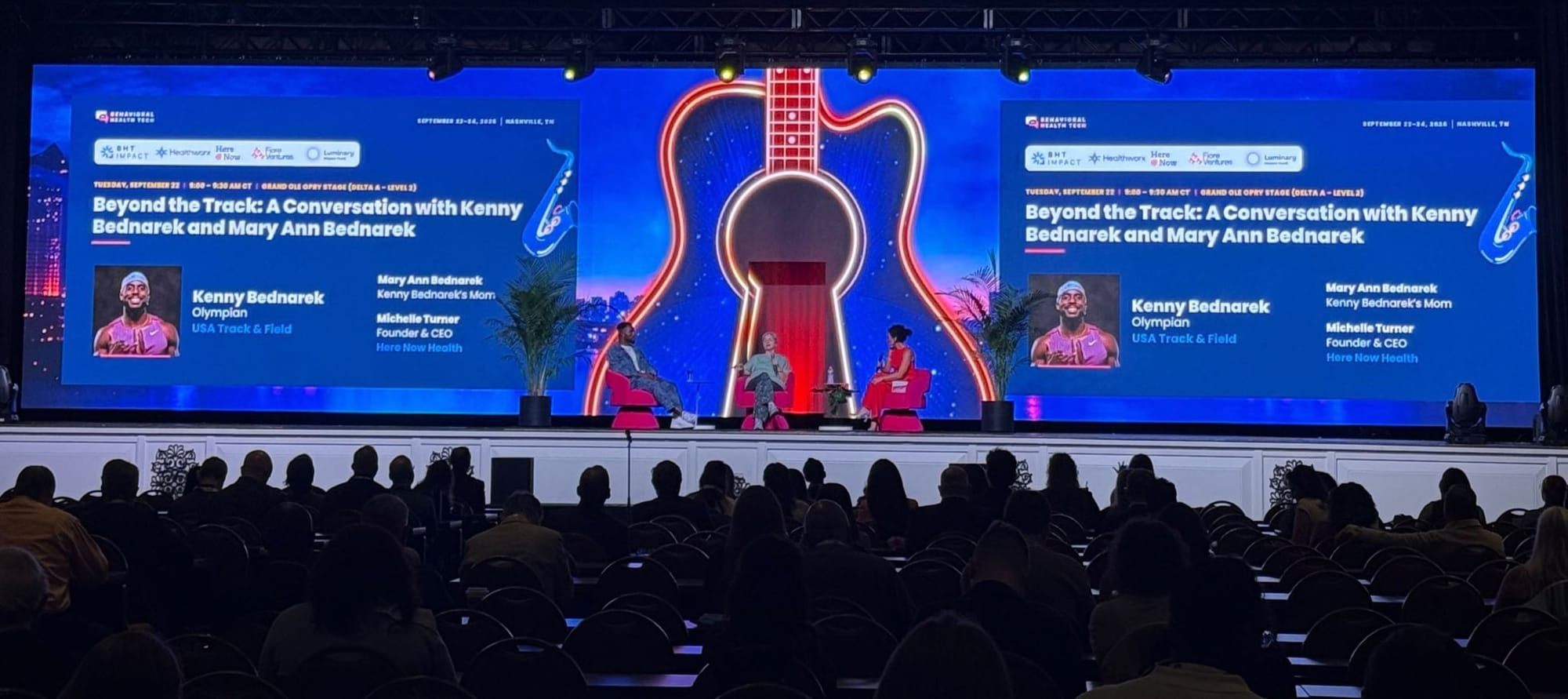
The conference tone was set on the Grand Ole Opry Stage by the opening keynote featuring Olympic sprinter Kenny Bednarek and his mother, Mary Ann Bednarek. Discussing the discipline required to reach the podium, Kenny Bednarek shared a mantra that resonated deeply with an industry currently undergoing rigorous self-reflection:
"Every single time I step on the track, I think about what I could improve from the day before, the week before."
As the industry moves from the "Expansion Era" into an "Accountability Era," this drive for continuous improvement defines what's next.
Let's dive deep into what drove this year’s main conversations
What did BHT 2026 reveal about the direction of behavioral health technology?
BHT 2026 confirmed that behavioral health is moving from an "Expansion Era," defined by provider headcount and access metrics, into an "Accountability Era," defined by measurable clinical outcomes and value-based contracts. Four themes carried that shift:
- a move toward measurement-based value over pure access,
- a widening gap between AI's operational promise and its clinical regulation,
- a structural mismatch between acuity and reimbursement,
- and employer-sponsored mental health benefits being redesigned around engagement and proof of ROI.
Theme 1: Beyond Access, The Shift to Measurement-Based Outcomes and Value
The conversation has shifted toward clinical effectiveness and the "moat" of sustainable business models: Value-Based Care (VBC).
A recurring point of friction discussed by leaders like Colleen Marshall (Two Chairs) and Anthony Oddo (Lucet) is the historical "Payer-Provider" disconnect regarding cost. As noted in the "Behavioral Health, Not BS" session featuring Stephen Smith (NOCD), Kristina Saffran (Equip), and Chris Segura (Health Care Service Corporation), the industry must raise the bar on evidence-based care as it has reached a breaking point with the "access-only" model. Payers and employers are now demanding data-backed proof that behavioral health interventions reduce total medical spend.
Strategic insights from the conference’s attendees are:
- Access is just an input. Having a provider in-network is a baseline; the true metric is knowing who improves, how quickly, and what happens when treatment fails.
- Medical-cost impact starts with clinical effectiveness. Ineffective care is the most expensive care because it delays recovery and increases total spend.
- Measurement-Based Care (MBC) must drive clinical pivots. Collecting scores without using them to change treatment decisions creates no economic or clinical value.
- Rewards for duration. Efficiency means helping members improve with the right amount of care, moving away from arbitrary session caps toward rewarded performance across complex population
Technical experts, including Julie Hayes Seibert (NCQA), Amy Pearlman (Carelon), Andy Kelly (Boulder Care), and Mariam Hanna (Optum), noted that data interoperability is the prerequisite for Value-Based Care (VBC). As highlighted in the Day 2 panel featuring Valant and Transformations Care Network, "measurement is the moat." It is the only way for providers to protect their margins in a risk-sharing environment. By shifting the risk profile from the payer to the provider, the industry is finally moving toward a model that produces results.
Theme 2: Responsible AI, Balancing Operational Efficiency and Clinical Caution
BHT 2026 highlighted a growing tension between AI excitement and the "Regulatory Gap." While AI is already being integrated into workflows, the rules governing clinical liability are still being written.
In 2026, AI is being positioned as the "how" for processing the mountain of data generated by measurement-based outcomes. However, the industry is viewing this tool through a lens of extreme clinical caution. While AI is already being used to solve operational bottlenecks, its role in direct clinical care remains a point of heavy debate.
Current adoption is bifurcated between efficiency and safety:
- Unlocking Capacity: Panels featuring GrayMatter and Vituity demonstrated how AI can standardize intake and automate front-office tasks, freeing clinicians to focus on high-level care.
- The Safety Threshold: Regarding AI-driven therapy, Zachary Gidwitz (An atendee from OpenRecovery) provided the defining "Waymo comparison." “Just as autonomous vehicles needed to be significantly safer—roughly 20x—than human drivers before broad regulatory and public acceptance, AI therapy tools must meet a vastly higher safety threshold before broad clinical adoption. We are currently far from that 20x mark.”
The "regulatory gap" and liability concerns remain significant hurdles. The conference consensus is that the next decade of technology will be governed by "Clinical Leaders Who Build AI, Not Just Bless It." These leaders are the essential gatekeepers who ensure algorithms are not just efficient engines for throughput, but safe instruments for clinical recovery.
Theme 3: Acuity-Matched and Accountable Care Models
A fundamental challenge posed by Solome Tibebu and session leaders was the realization that more care doesn't necessarily mean better outcomes. The current economic mismatch occurs because the reimbursable unit is a session. This model is highly efficient at producing sessions but often leads to over-serving low-acuity patients with traditional therapy while under-serving high-acuity cases.
Carter Barnhart (Charlie Health) discussed how AI-informed care is closing the gap for these high-acuity patients, particularly those with complex trauma or co-occurring disorders (SUD). The shift requires moving away from episodes of care toward continuous, accountable support where providers are paid for the right care rather than just more care.
The missing infrastructure: step-down care. The session on step-down care identified the infrastructure between intensive inpatient stays and standard outpatient visits as too thin or non-existent. Developing this middle-tier infrastructure is essential for creating a sustainable continuum that prevents patients from falling back into expensive crisis cycles. Without robust step-down models, the system remains stuck in its most expensive, fragmented patterns.
4. Modernizing Employer Benefits and Workplace Mental Health
The "EAP 2.0" shift is being driven by employers who are moving from being passive benefit providers to active access points. Employers are also dropping traditional, low-utilization benefits for programs built to get used.
Dr. Billina Shaw (ViCat Consulting) provided the week's most striking metaphor, noting that employees know when they are being treated as "human capital" versus "herded cattle." Those who feel like herded cattle, she warned, will "go astray to avoid the slaughterhouse of burnout."
Modernizing these benefits requires:
- Tackling upstream stressors. Employers like Bank of America are focusing on financial and environmental stressors before they manifest as clinical crises.
- High-engagement models. The SHRM Foundation and Lockton Companies highlighted that successful vendors must now prove a measurable ROI for corporate health plans, showing reduced burnout and improved resilience.
- Beyond the checkbox. Workforce intelligence is moving beyond compliance toward data that acts as a proxy for true clinical connection and employee wellness.
Conclusion: Improving for the Day Ahead
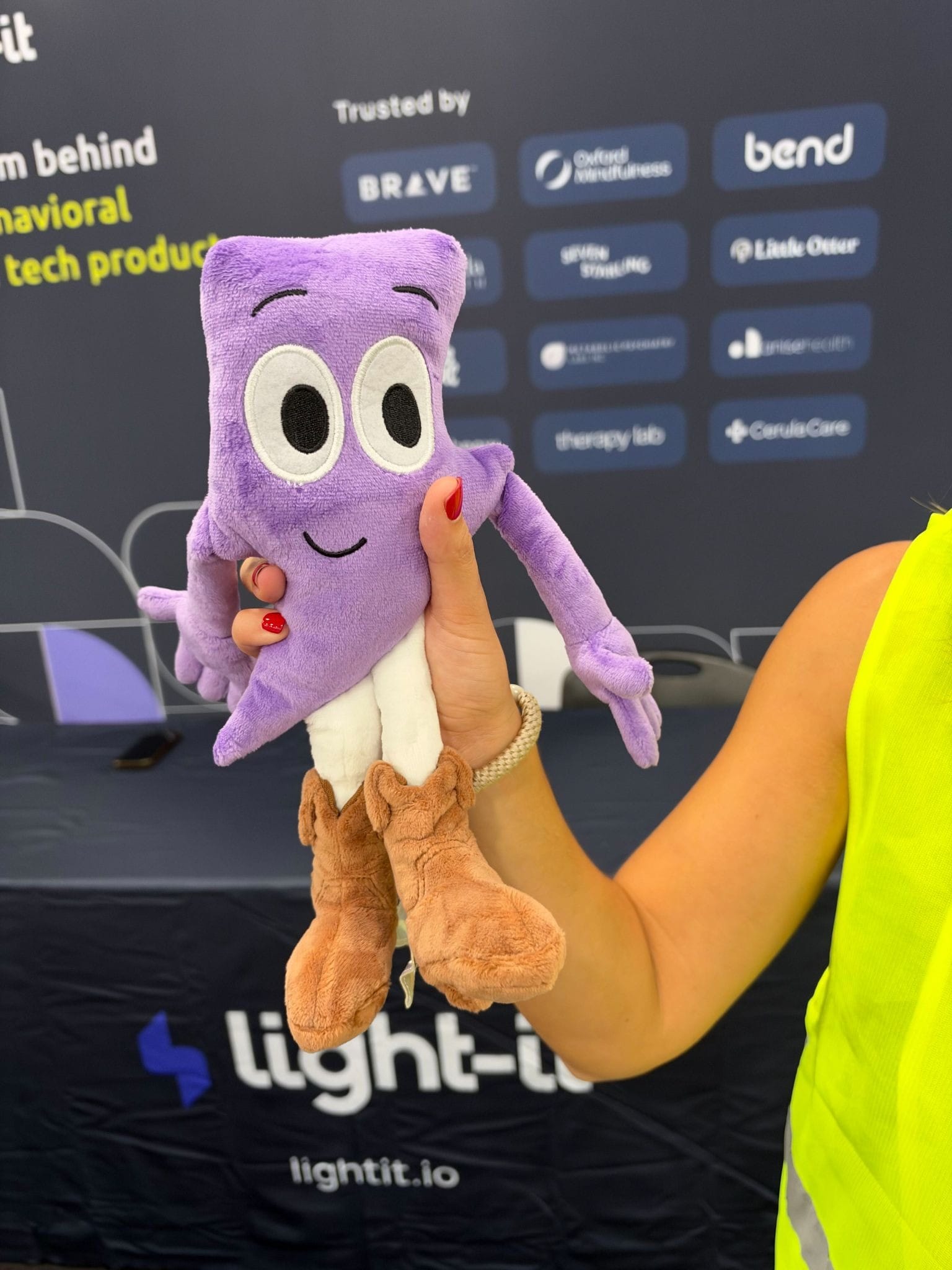
BHT 2026 in Nashville was a blend of high-level strategy and community, from pickleball on the Rula court to live music and Honky Tonk receptions that even Thundy enjoyed.
The message for executives is clear, though: the transition from access to value is no longer optional. To stay aligned with the Nashville rhythm of constant improvement, leaders must shift their contracts to prioritize outcomes over inputs.
A useful BHT 2026 checklist for leaders:
- Audit outcome metrics. Transition from tracking sessions delivered to tracking measurable clinical improvement across your member populations.
- Move from advisory to authority. Ensure clinical leaders are the architects who build your AI strategy, focusing on RCM and operational bottlenecks before clinical interventions.
- Bridge the acuity gap. Evaluate step-down capabilities and community-based solutions to ensure patients have an accountable path between inpatient crisis and traditional outpatient care.
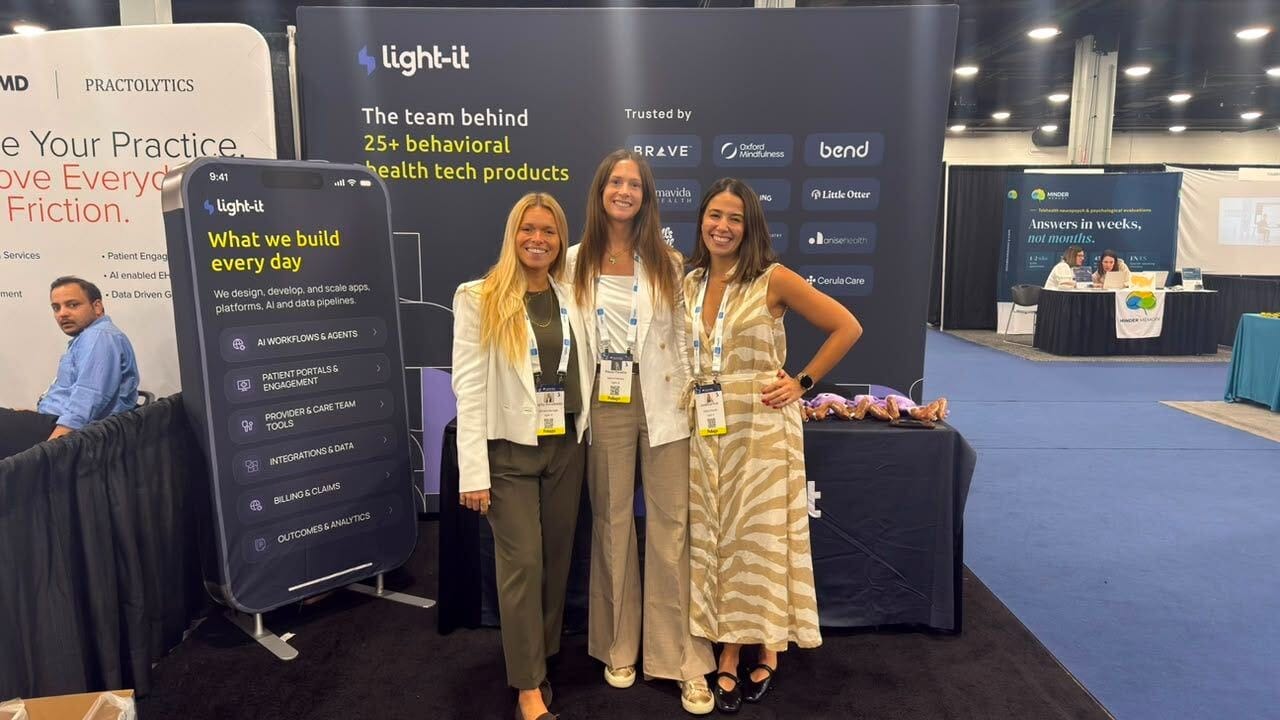
If your team is weighing where to start on measurement-based care, AI governance, or step-down infrastructure, Light-it's healthcare product and engineering teams work inside stacks like yours.

It was great meeting everyone this year! We had amazing conversations. We hope to see you next year.