Teaching how to save a life: Gamified CPR-Kiosk
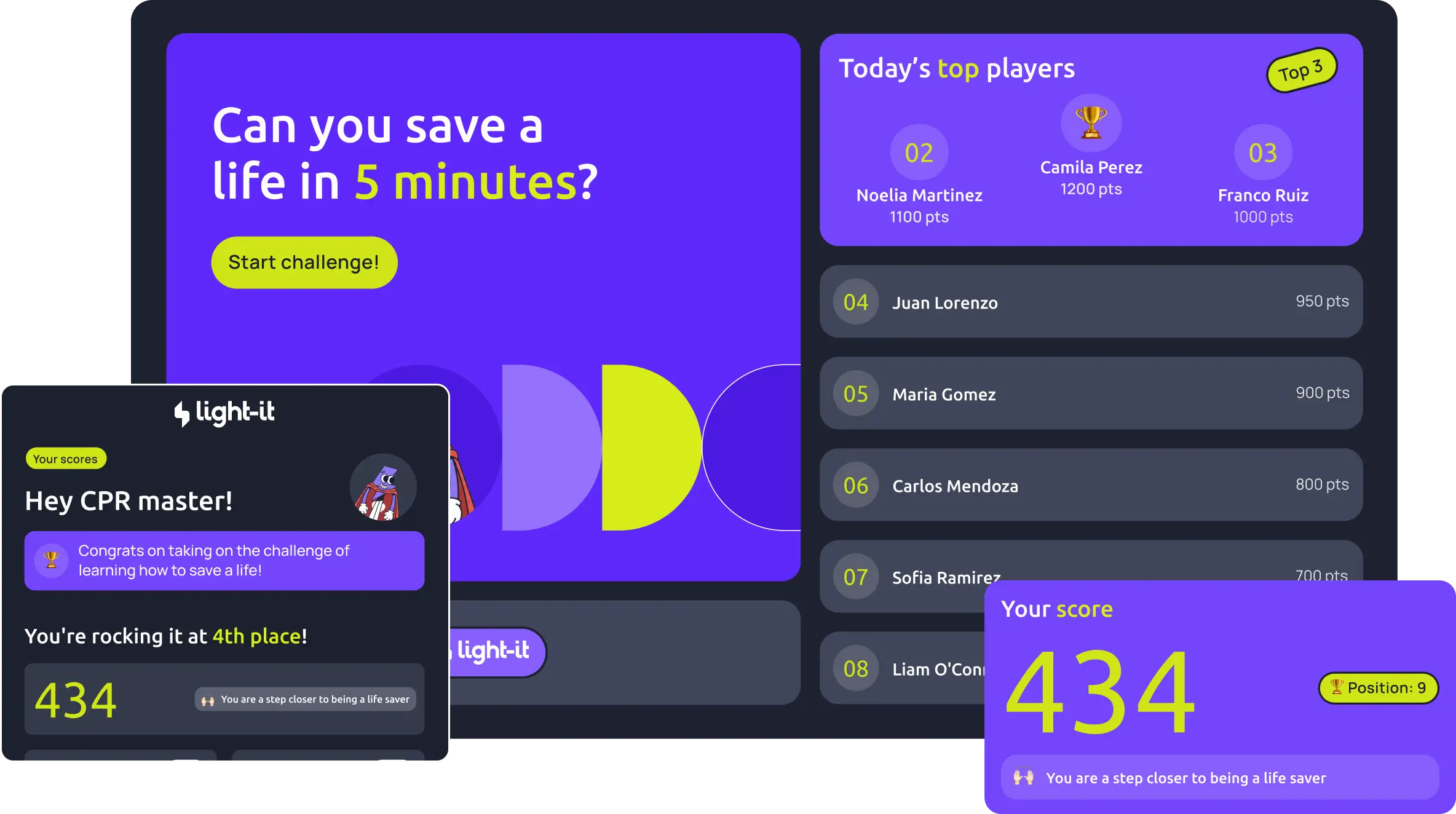
What if technology could teach someone how to save a life?
That was the question our team asked during an internal hackathon a few months ago. Every product we build has one goal: help people live healthier. But this time, we wanted to take it a step further, to share our knowledge beyond our usual reach.
The problem
Every 2 to 5 seconds, someone in the world suffers a cardiac arrest; many in public settings.
It’s estimated that only ~30% of the global population has ever received CPR training, and even fewer have up-to-date, practiced skills.

The Solution
+350k
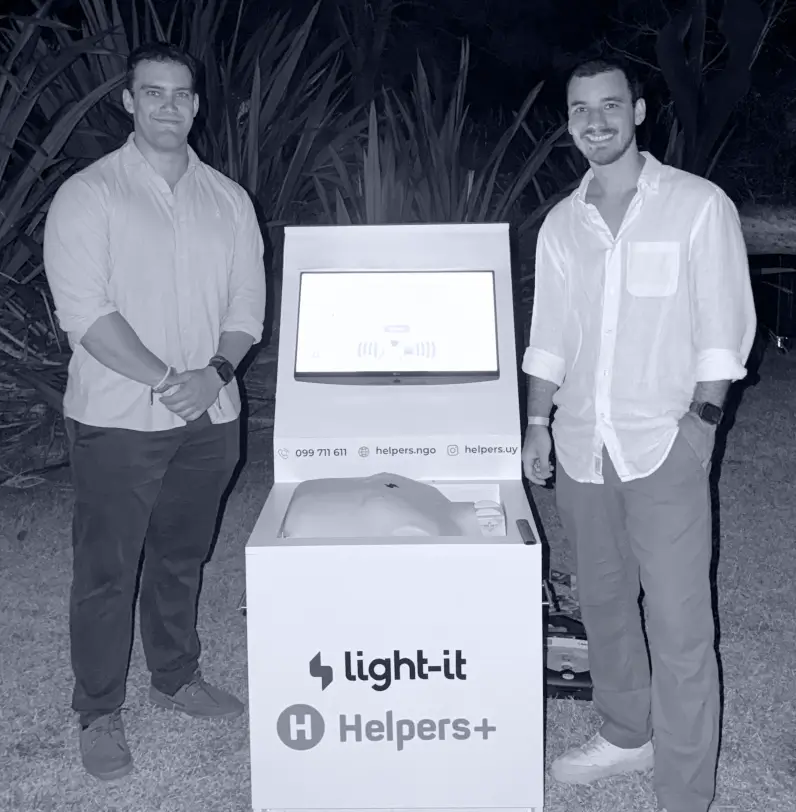
A purpose-driven project
Inspired by the Hands-Only CPR Kiosks developed by the American Heart Association across the US, our team set out to design and build our own version, combining our technical, design, and product expertise to create something that could truly make an impact. To build our own kiosk, we partnered with Helpers, an NGO that, through an innovative model of community assistance and peer support, responds to emergencies by making help both effective and immediate, increasing the chances of survival for victims.
Global impact
We designed fully open-source software and made all resources publicly available to maximize impact. Our CPR training kiosk transforms everyday people into potential first responders, teaching them -through hands-on, sensor-based feedback- how to perform effective chest compressions.
The process & workflow
Turning CPR Into a Gamified experience:
From the beginning, our UX approach has focused on something universal: Integrating evangelization, education, and play.
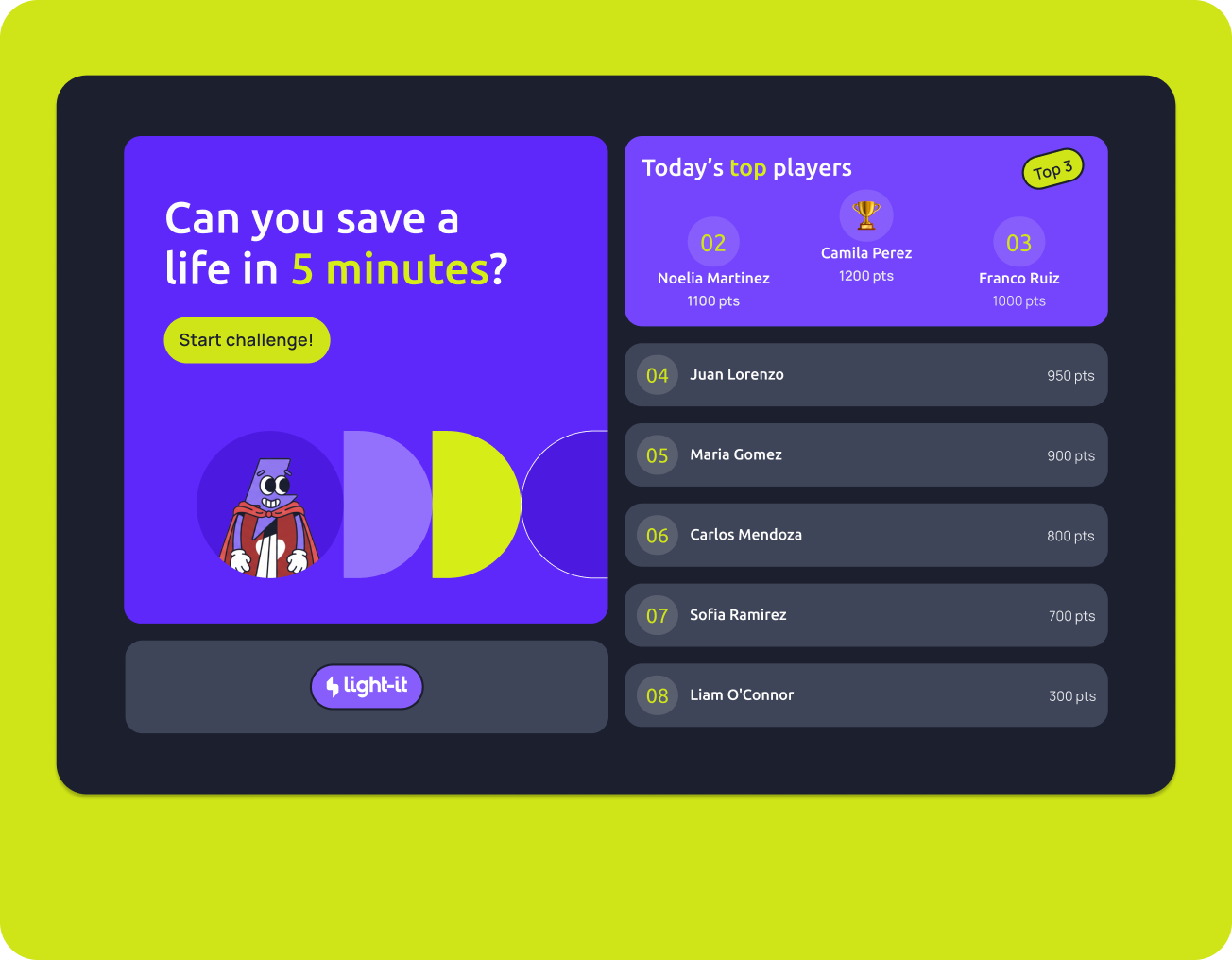
Turning CPR practice into a game is a creative and natural way to increase engagement and make the learning stick. Gamification is part of our culture as a team; it reflects the way we design products that feel friendly, approachable, and rooted in real human behavior. But the kiosk isn’t a set of flashy screens.
Creating consistency: Where digital meets physical
Every interface was intentionally simple, accessible, and aligned with the physical experience of compressing the mannequin. We followed the classic usability rule of matching the system to the real world, making sure every cue, instruction, and visual spoke the same “language” as the hands-on action.
Development:
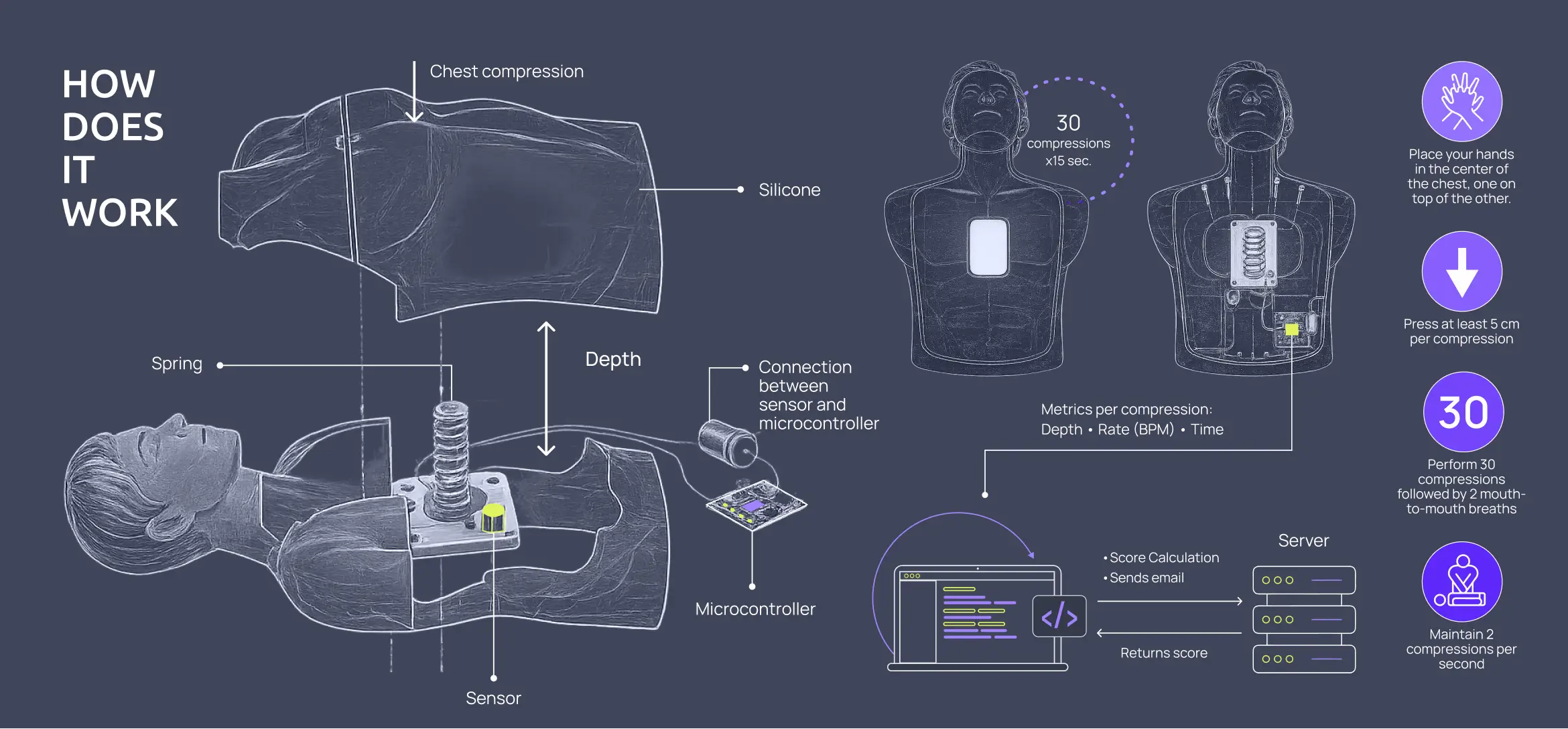
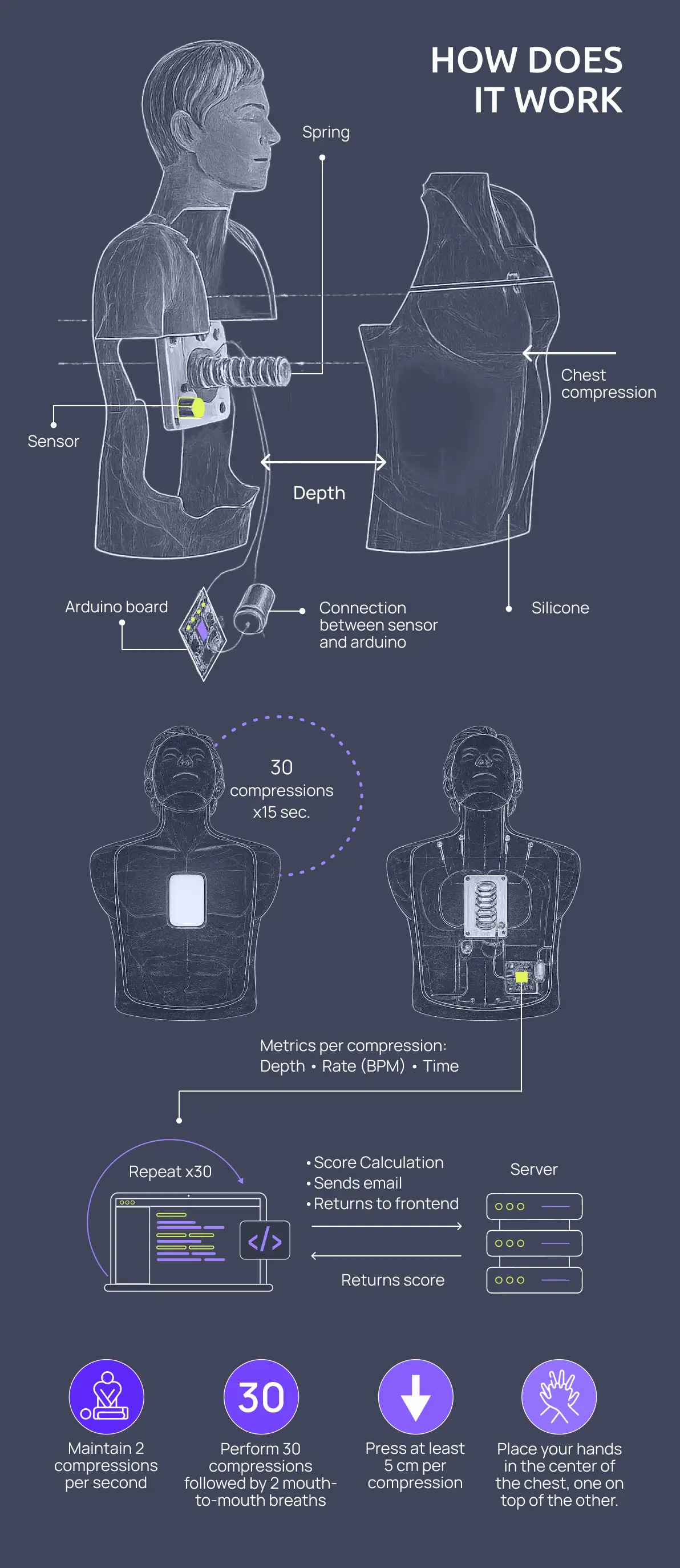
The kiosk operates through a simple yet effective setup. Inside the training dummy, a distance sensor connected to an Arduino captures real-time data as users perform CPR to the rhythm of well-known songs, each with a tempo of approximately 100–120 beats per minute.
This information is then sent to a backend system built in Node.js, which processes the results and communicates them to the frontend interface developed in React.
Once the session is complete, the system automatically sends an email with the user’s performance results, providing instant feedback and reinforcing learning through technology.
Experience the Rhythm
Tech Stack
& Integrations


Why it matters:
From bystander to lifesaver
Every year, thousands of lives are lost to sudden cardiac arrest, a silent emergency that strikes without warning.
In most countries, survival rates remain critically low, often below 10%, largely because help doesn’t arrive fast enough. Yet, studies show that when CPR begins within the first two minutes, the chances of survival can increase by more than 80%.
These first moments are everything.
As part of the healthcare ecosystem we wanted to be a part of the solution. Light-it's team is driven by the purpose that tech can impact positively on people’s lives. Through play and hands-on learning, reach and impact can be multiplied.
