Purpose-built AI for the complexity of healthcare at scale

Most healthcare organizations have built AI tools, but without the right foundation, they end up disrupting care, overcomplicating processes, and losing the value of the investment.

decorative green line

Integrations

What we do

Not all AI works the same way in a product. The right approach depends on what you want AI to do for your users whether it is assist, create, or act.

Assistive: AI helps users do their job faster, but they're still the ones doing it.

Generative: AI creates the output (a note, a summary, a document) and the user reviews it.

Autonomous: AI handles a full workflow end-to-end; the user steps in only to approve.

We help healthcare teams incorporate it across three distinct layers: how software gets built, how organizations operate, and what products actually do.

In the development workflow:

How we use AI to build better software, faster.

AI-Assisted Design & Discovery

We embed AI into UX research and design to compress discovery cycles without losing clinical context.

AI Requirements & Sprint Planning

We use AI to break down complex healthcare requirements into well-scoped, buildable tickets faster.

AI Code Generation & Review

Our engineers use AI pair-programming to ship faster while keeping compliance requirements built in from day one.

AI Automated Testing & QA

We generate test suites alongside features so regulated environments get broader coverage without slowing release cycles.

In our customer's internal operations:

How we can help your team to optimize their work using AI.

AI Workforce Productivity

We help teams identify where AI can reduce repetitive work and build the agents that replace it.

AI Medical Education & Training

We build intelligent learning tools for clinical staff onboarding, licensing, and continuous development. We also train teams to maximise adherence of the new tools implemented.

AI Research & Life Sciences

We build AI tools that accelerate patient recruitment, literature analysis, and evidence generation for research teams.

AI Revenue Cycle Management

We help healthcare organizations optimize claims, reduce denials, and accelerate reimbursements with AI.

In our customer's product:

The AI features we build directly into what your users experience.

AI Patient Access & Contact Centers

We build conversational and voice agents that handle scheduling, intake, triage, and eligibility on behalf of your patients.

AI Clinical Documentation

We build ambient documentation tools that turn clinical conversations into accurate notes and records.

AI Clinical Knowledge & Decision Support

We build tools that surface relevant clinical knowledge and patient-specific insights at the point of care.

AI Patient Engagement

We build personalized patient-facing experiences that improve activation, adherence, and outcomes across care journeys.

Our approach

The process

Process Intelligence:

Most teams jump into AI. We ask where it actually belongs first and give your leadership a prioritized roadmap to act on.

Map tasks, decisions, and bottlenecks as they actually run.

Flag high-volume, rule-based processes ripe for automation.

Identify where AI supports clinical judgment, without replacing it.

Spot where AI adds friction instead of value.

Investment Analysis:

We evaluate full costs, expected ROI, and the risk factors -from adoption to compliance- that determine whether an implementation succeeds.

We quantify current costs: admin hours, error rates, rework, attrition.

We project full costs: build, integration, change management, and ops.

We model the ROI: expected return, payback period, and risk scenarios.

People Readiness

This is what most organizations skip. It determines whether AI adoption works.

Design the AI interaction model for each clinical and operational role.

Map how new AI flows connect to EHR, ops platforms, and data systems.

Map how team roles shift.

Run training and onboarding sessions to drive adoption across roles.

Build fast, validate early

We build prototypes and frameworks your teams can test and interact safely with before anything goes to production.

Staff see what changes before they affect their workflow and routines.

Clinicians flag what doesn't work, while corrections can still be made.

Ops managers validate the designed flow against how their teams work.

vectorial and abstract modern design with bright colors

Light-it's approach to AI in Healthcare Software

AI moves fast. Healthcare can't afford mistakes. 
We operate in that gap.

Read our AI stance
decorative green line

Real-world AI use cases

We carry the same principles through every engagement: sound judgment on where AI belongs, strong engineering on how it works, and results your organization can verify.

clients

Projects developed in partnership with our clients, from early concept to real-world products.

PsychNow patient medication management dashboard showing prescription tracking and clinical notes
clients
PsychNow is an innovative digital health platform that leverages multimodal ML/AI technology to enhance mental healthcare delivery. The solution enhances provider-patient interactions while maintaining high-quality care standards, featuring advanced software tools to support mental health professionals in their practice.
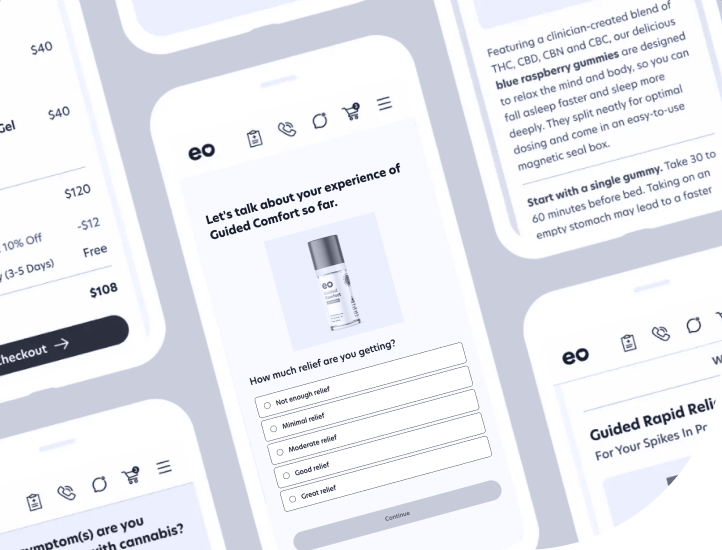
EO mobile app screens showcasing cannabis-based wellness product experience and symptom relief surveyEO mobile app screens showcasing cannabis-based wellness product experience and symptom relief survey
clients
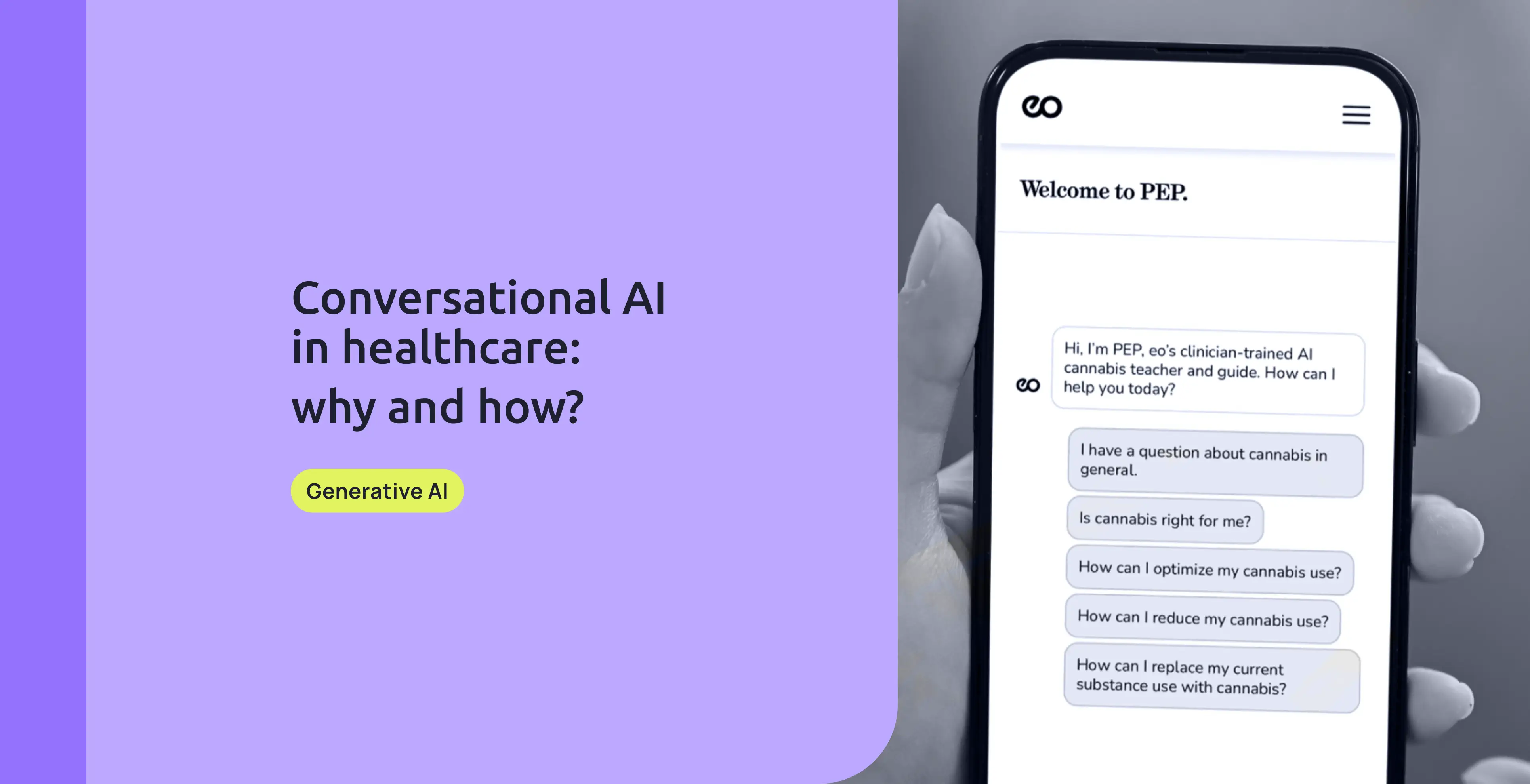
Millions turn to cannabinoids for relief, most without clinical guidance. We helped EO Care deliver personalized, AI-generated care plans in seconds, with clinicians always in the loop.
SecAI call center analytics dashboard with AI agent management and real-time performance metricsSecAI call center analytics dashboard with AI agent management and real-time performance metrics
clients
Secai is a healthcare AI company that builds tools to automate administrative and operational tasks for healthcare providers.
The company develops solutions such as Voxira.ai (an AI clinic secretary) and NoteGen (an AI medical scribe). The team assessed and roadmapped Voxira.ai's product, integrations, and go-to-market strategy.
innovation lab

Projects developed by Light-it's Innovation Lab, our internal R&D and prototyping division.

ClinicFrame Scribe dashboard showing AI-powered medical session transcription and upcoming patient appointments
innovation lab
ClinicFrame empowers healthcare professionals with a HIPAA-compliant AI platform that simplifies clinical documentation, enhances pre-visit preparation, and automates post-visit workflows. Clinic Frame has two products as of today: CompliantChatGPT, a HIPAA-compliant medical AI copilot and ClinicFrame Scribe, an AI-powered medical scribe.
 Lumia mental wellness app goal selection screen with categories including anxiety, stress, focus, and happiness
clients
Lumia is the world's first AI- powered meditation app. The app, currently in beta, delivers deeply personalized meditations and mindfulness experiences powered by generative AI.

Learn from our Experts

Discover our exclusive contents on Healthcare innovation.
The approach

What is healthcare QA, and why does it require a specialized approach?

  • Healthcare QA is quality assurance designed for software that handles Protected Health Information (PHI) and clinical workflows. It goes beyond finding defects to validate patient safety, multi-role permissions, and audit-ready evidence. Generic QA misses healthcare-specific risks such as broken data flows between systems, role mismatches, and ambiguous clinical workflows.
What does "embedded QA" mean in software development?
  • Embedded QA means quality engineers are part of the product team from day zero, not a final-stage gate. At Light-it, QA participates in discovery, defines risk-based release criteria, and continuously validates patient, clinician, and admin workflows. The result: fewer production incidents, fewer last-minute surprises, and defensible release decisions.
How do Light-it's two QA engagement models work?
  • We offer two modes. In the first, QA is embedded inside a full Light-it product team quality-by-design from day zero. In the second, our QA engineers embed inside your existing team, mapping your domain and risks first, then progressively raising standards through templates, regression strategy, and shared risk priorities. No disruption to current workflows.
Does Light-it test web apps, mobile apps, or both?
  • Light-it QA covers web UI, cloud applications, mobile, API and integration validation, and data-flow verification. Coverage is organised around healthcare risk in three areas: product and workflow validation, integrations and interoperability, and data, security, and permissions. Performance engineering and penetration testing are scoped as separate engagements when needed.
When in the product lifecycle should QA start?
  • The earlier, the better. Light-it's framework integrates QA from discovery and design, when requirement gaps, multi-role workflow issues, and PHI-handling decisions are cheapest to fix. Bringing QA in only at release stage means buying expensive surprises and shipping with reduced audit evidence. Our embedded model covers discovery, development, release, and maintenance.
How does embedded QA reduce production incidents?
  • By validating complete user journeys (patient, clinician, admin) under real-world conditions before go-live, our QA process catches workflow, data, and permission failures earlier than ticket-based testing. Risk-based regression design and structured release-readiness reporting mean fewer surprises post-deploy and faster root-cause analysis when issues do occur.

Compliance & Legal

Does Light-it handle PHI (Protected Health Information) during testing?
  • We don't use real PHI in our testing or AI tooling. Our default is masked or synthetic data, with strict separation between production and test environments. We validate role-based access, data-handling logic, and authorisation behaviour across systems and environments to ensure HIPAA-aligned operations throughout the product lifecycle.
Does Light-it provide HIPAA compliance audits?
  • A formal HIPAA compliance audit isn't included by default in QA engagements, it's typically scoped separately, often with a certifying body. Our QA validates that role-based access, PHI handling, and permission logic behave correctly, which supports HIPAA-aligned operations and produces defensible evidence, but doesn't replace a formal audit.
How does Light-it use AI in healthcare QA testing?
  • AI accelerates test design and ideation, never sign-off. We follow strict principles: no real PHI in AI systems, masked or synthetic data only, human review before validation, and humans remain accountable for risk decisions. AI handles scale; humans hold judgment so clinical responsibility stays real — in healthcare, no algorithm signs off on patient safety.
What does "audit-ready evidence" mean in your QA process?
  • Audit-ready evidence is structured, traceable documentation that supports go/no-go decisions and stands up to regulatory review. It includes release-readiness reports, risk dashboards, regression scope definitions, role-and-permission verification logs, and root-cause analysis. The goal: every release decision is informed, measurable, and defensible.
Are accessibility audits relevant for HIPAA-regulated products?
  • Accessibility and HIPAA are separate frameworks, but patient-facing healthcare products often face both ADA and HIPAA obligations. WCAG 2.1 AA is the recognised standard for the ADA in digital products. Our audit reduces legal and UX risk by turning accessibility gaps into a prioritised remediation backlog — especially relevant for patient portals and intake flows.
decorative green line

Talks, Research & Courses

What we're learning and sharing

Builders, practitioners, and domain experts share their perspectives, reflections, and learnings from the field.

DHI Roundtable: AI in Healthcare

A practitioner-led conversation on where AI is creating real value in health systems and where the risks require more careful thinking.
Watch the roundtable

AI Responsibility in Healthcare: Ravit Dotan

Ravit Dotan is an AI ethics researcher and advisor who contributed her AI Responsibility Assessment to our work. It remains one of the most referenced pieces we have published and one of the most honest conversations in this space.
Read the assessment

Light-it Academy:

Our structured course on building AI in healthcare, covering architecture, compliance, and product decisions for teams doing this work for the first time or the fifth.
Explore the course

Frequently Asked
Questions

Learn everything about us and the way we work

Light-it team reviewing healthcare software documentation together
What is Light-it's approach when it comes to AI?
  • Before writing a single line of code, we map your workflows (tasks, decisions, handoffs, and bottlenecks)  to identify where AI genuinely belongs in your operation and where it would create more friction than value. The output is a prioritized opportunity map that your leadership team can evaluate and act on. If you want to know more, check our stance on AI.
Do clinicians get to see the AI before it goes live?
  • Yes. We build prototypes specifically so your staff can interact with them before it affects their workflow. Clinicians flag what doesn't work while corrections are still easy to make, and ops managers can validate the designed flow against how their teams actually operate.
What kinds of AI systems does Light-it build for healthcare?

Light-it builds custom AI systems for healthcare, including clinical documentation tools, AI assistants for clinicians and staff, patient-facing conversational agents, decision support solutions, and workflow automation platforms that improve efficiency, care delivery, and patient outcomes. The team can adjust to your product’s needs.

Is Light-it's work HIPAA compliant?

Yes. Light-it regularly builds healthcare software that handles Protected Health Information (PHI) and is designed with HIPAA compliance requirements in mind. We follow secure development practices and can implement safeguards such as access controls, encryption, audit logging, and HIPAA-compliant infrastructure. While compliance depends on the entire solution and organization, we make security, privacy, and compliance core considerations throughout the development process.

How is Light-it different from a general AI development agency?

We work exclusively within healthcare, which means our understanding of clinical workflows, regulatory environments, and care delivery constraints is the starting point, not something we learn on the job.

What if our organization isn't sure it's ready for AI?

That's exactly where the process intelligence phase comes into play. Many organizations come to us with that uncertainty. We'll help you determine whether AI is the right move right now, where to start, and how to sequence investment so you build a strategic asset rather than take on unnecessary risk.

AI Strategy & Implementation

What is Light-it's approach when it comes to AI?

  • Before writing a single line of code, we map your workflows (tasks, decisions, handoffs, and bottlenecks) to identify where AI genuinely belongs in your operation and where it would create more friction than value. The output is a prioritized opportunity map that your leadership team can evaluate and act on. If you want to know more, check our stance on AI.
Do clinicians get to see the AI before it goes live?
  • Yes. We build prototypes specifically so your staff can interact with them before it affects their workflow. Clinicians flag what doesn't work while corrections are still easy to make, and ops managers can validate the designed flow against how their teams actually operate.
What kinds of AI systems does Light-it build for healthcare?
  • Light-it builds custom AI systems for healthcare, including clinical documentation tools, AI assistants for clinicians and staff, patient-facing conversational agents, decision support solutions, and workflow automation platforms that improve efficiency, care delivery, and patient outcomes. The team can adjust to your product’s needs.
Is Light-it's work HIPAA compliant?
  • Yes. Light-it regularly builds healthcare software that handles Protected Health Information (PHI) and is designed with HIPAA compliance requirements in mind. We follow secure development practices and can implement safeguards such as access controls, encryption, audit logging, and HIPAA-compliant infrastructure. While compliance depends on the entire solution and organization, we make security, privacy, and compliance core considerations throughout the development process.
How is Light-it different from a general AI development agency?
  • We work exclusively within healthcare, which means our understanding of clinical workflows, regulatory environments, and care delivery constraints is the starting point, not something we learn on the job.
What if our organization isn't sure it's ready for AI?
  • That's exactly where the process intelligence phase comes into play. Many organizations come to us with that uncertainty. We'll help you determine whether AI is the right move right now, where to start, and how to sequence investment so you build a strategic asset rather than take on unnecessary risk.
Your Vision. Our Execution.
Two web developers share a screenshot showing code for a digital health product

Start a conversation

Tell us about your initiative. Our team will follow up within one business day.

Name*
Email *
Phone number *
Type of project *
E.g. End-to-end
Project details *
Budget *
E.g. 150k - 500k
How did you hear about us? *
E.g. Social media

By submitting, you agree to our Privacy Policy.

Thank you!
Your submission has been received!
Oops! Something went wrong while submitting the form.