
Remote patient monitoring software development that turns patient data into clinical action
We design and build remote patient monitoring systems that connect devices, ingest and process data, and support care teams with alerting and operational tooling, so patients stay monitored and clinicians stay ahead of what matters.
What we can do for your product
Device and Wearable Integrations
Connectors for glucometers, BP cuffs, pulse oximeters, scales, cardiac monitors, and consumer wearables, built to hold up as your device partner list grows past the first one or two. Every integration is designed around the vendor's actual SDK and data quirks.
We worked closely with Metabolic Psychiatry Labs to bring to life a product that allowed real-time syncing with several wearables and devices that allowed remote patient monitoring.

Alerting Systems and Clinical Dashboards
Threshold and trend data work together to cut false positives, so alerts land in the dashboards clinicians already rely on during a shift. On top of that, escalation thresholds adjust to each patient's own baseline instead of one fixed cutoff for everyone, so every alert reflects what's normal for that patient.
For Sensifai, we built a platform that alerts clinicians when a patient's metrics move outside their normal range. Clinicians can also pull up historical data to decide on the best course of action.

Real-Time Data Ingestion and Processing
Every reading is automatically checked, standardized, and processed the moment it arrives, on infrastructure built to handle thousands of patients at once from day one.
We built an intuitive dashboard for clinicians at Metabolic Psychiatry Labs that allows them to process data for multiple patients, identifying trends and provide personalized care

Care Team Workflows and Escalation Logic
Routing, on-call logic, and audit trails send each alert to the right clinician automatically, with escalation and a documented trail if nobody acknowledges it in time. The system mirrors how care coordinators and nurses actually triage their day, with room to add an AI layer for preventative care later on.

EHR Integration Services (FHIR-Based)
FHIR R4 and HL7v2 integration work connecting RPM data to Epic, Athena, Cerner, Healthie, NextGen, and other major EHRs, so readings and alerts land in the chart clinicians already use. Our engineers have shipped these integration work before.
HIPAA Compliant RPM Security
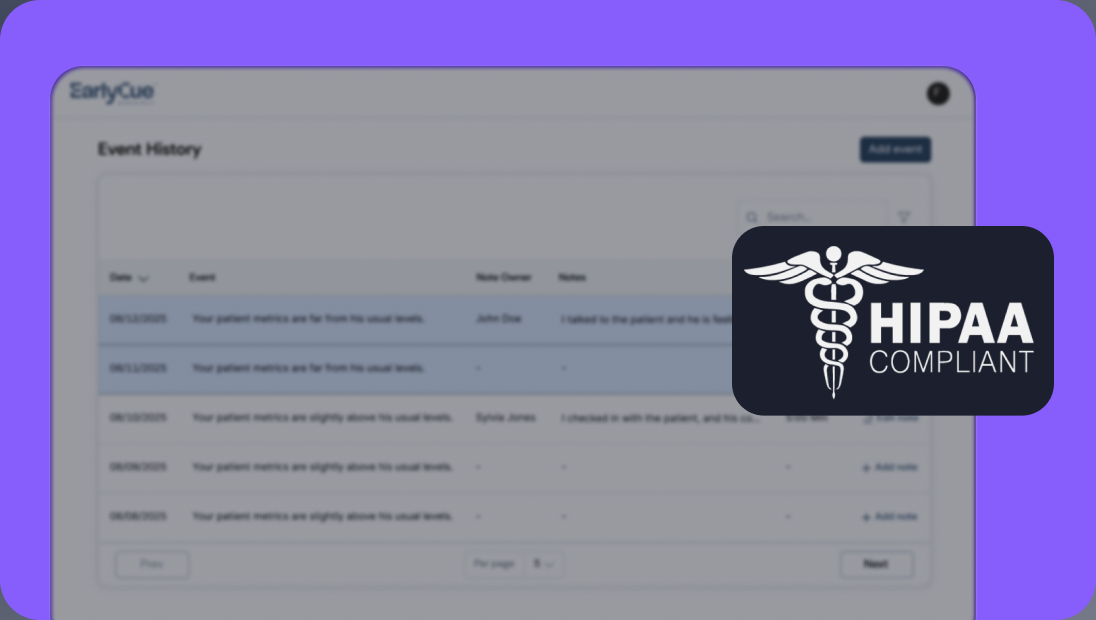
Identity verification, role-based access, and PHI handling built to HIPAA requirements from day one, with BAAs in place and security practices aligned to SOC 2 and HITRUST expectations. Every RPM system we ship is HIPAA compliant by design, not patched afterward.
Our approach
Planning & Discovery
For a new RPM system, we run full discovery: device inventory, alert logic requirements, care team workflow mapping, and integration mapping against your EHR and device vendors, ending in a validated roadmap with scope, timeline, and estimates. If your requirements are already defined, we run focused alignment sessions instead, so the full team can start productive from day one.
Agile Delivery
You get full visibility through your own tools (Slack, Jira, or equivalent), with structured touchpoints so nothing falls through the cracks.
Team Assembly
We staff PM, data engineering, alerting and rules engineering, device integration engineering, QA, DevOps, and clinical/compliance specialists around your actual scope. Every person is a healthcare specialist who embeds in your workflows and tools, and your leadership has direct access to everyone building the product.
Launch & Production Releases
RPM features move through defined stages: internal validation, a pilot cohort, limited production, then full production, each with measurable success criteria before we advance. Staging, QA sign-off, deployment, and post-launch monitoring are managed end to end.
Maintenance & Ongoing Evolution
Once your RPM system is live, we reassess together: tuning alert thresholds against real-world data, adding device partners, or expanding to new sites and service lines. Some clients scale down to lean maintenance, some kick off discovery for the next module, and some are ready to bring development in-house. We define the next step with you, based on what the system actually needs.






.webp)


Light-it as your top healthcare software company


“Light-It added valuable engineering capacity and expertise to our team. They were able to flexibly scale up and down with our needs and were valuable thought partners in our compliance journey. They always ask for the “why” behind technical decisions and help us find the most efficient, secure, and scalable solution for our objectives. I’d highly recommend Light-It to other startups and founders”

“The Light-it team was very communicative and quick to respond whenever I had a question or feedback.”

“Light-it has been extremely adaptable to our workflows. If you’re a healthcare company looking for product engineers, choose them”

"Working with Light-it during our discovery process was a great experience. Their team traveled to Philadelphia for an in-person kick-off, which gave us a good head start and got us through the biggest uncertainties. After three intense days, we continued the project through virtual sessions to finish answering questions and refining the outcome. It was a rewarding partnership throughout the entire process!"

"It was such an incredibly positive experience to work with Light-it. Communication and execution were excellent all around – from the outset, they ensured our goals and expectations were aligned, the discovery process was first-rate, and the development team delivered efficiently. The proactive reach out from company leadership for feedback after the work was completed really differentiates them. Highly recommend".

“Working with Light-it has been delightful, so much so that we’re committed to keep working with them. This project has been successful, and we’re extremely satisfied at all levels. All our staff is very impressed with Light-it’s work, and there has been a lot of positive feedback from that angle.”

"Working with Light-it has been a phenomenal experience - from the start, they helped envision how our care platform and experience should look and feel, and brought it to life with precision and expertise. We are so grateful to have them as a partner!"

"What a conscientious and capable group of humans. They’re disciplined, efficient, responsive, proactive, and very strong communicators. They have a deep understanding of healthcare best practices, rules, and regulations. Most importantly, they sweat the details and care deeply about the end product".

“Light-it is well-versed in healthcare service platform options, and it was a pleasure to work with them on a website upgrade project. They are generally great humans and good communicators, and they work hard to come in under budget and before the deadline! This is a great team to trust with your dev needs.”

“We’re most impressed with Light-it’s expertise, work ethic, and productivity. They deliver high-quality work, and we’ve enjoyed working with Light-it’s team. We’re extremely satisfied at all levels.”

“Light-it is the pinnacle of professional expertise in modern digital mental health software design and development”.
Frequently Asked Questions
Learn everything about us and the way we work
Not necessarily. Most clients bring us in alongside their existing team, not instead of it. You keep architectural ownership; we add healthcare-fluent engineering and data capacity where you need it, whether that's device integration, alerting logic, or the EHR connection underneath.
We sign BAAs, follow HIPAA requirements for any PHI handled, and align security practices with SOC 2 and HITRUST standards. For pharma and medtech clients, we also work to 21 CFR Part 11 and design with MLR review in mind from the start, since RPM data often carries the same documentation requirements CMS expects for CPT codes 99453, 99454, 99457, and 99458.
On the device side, we've integrated glucometers, BP cuffs, pulse oximeters, scales, cardiac monitors, and consumer wearables. On the record side, we've built integrations with Epic, Athena, Cerner, and NextGen, using FHIR R4 and HL7v2 depending on the systems involved.
Time estimations vary depending on each project, device partner count, EHR integration complexity, and compliance review requirements. This range reflects typical project shapes rather than a fixed commitment; your discovery phase will confirm a specific timeline.
Yes. We believe AI can optimize processes and be very helpful in RPM workflows. Let's discuss your project's requirements to see where it would best fit.
